| Type of Gearboxes -
Double reduction gearbox |
|
Video |
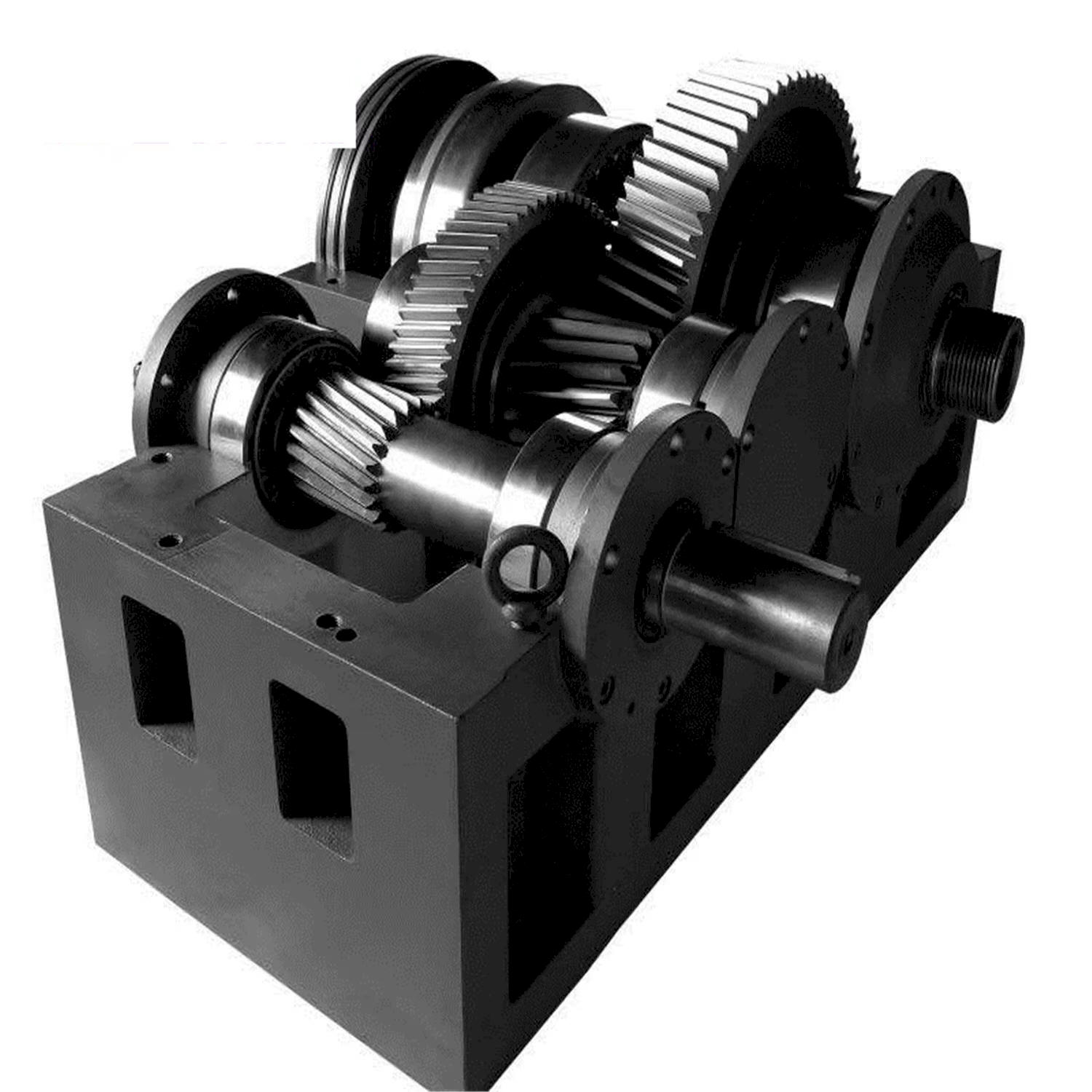
| A double reduction
gearbox is a mechanical device that uses two sequential stages of gears
to significantly decrease rotational speed and proportionally increase
output torque. This design allows for much higher gear ratios within a
compact space compared to a single-reduction gearbox |
| |
| Key components and
function: |
|
Gears |
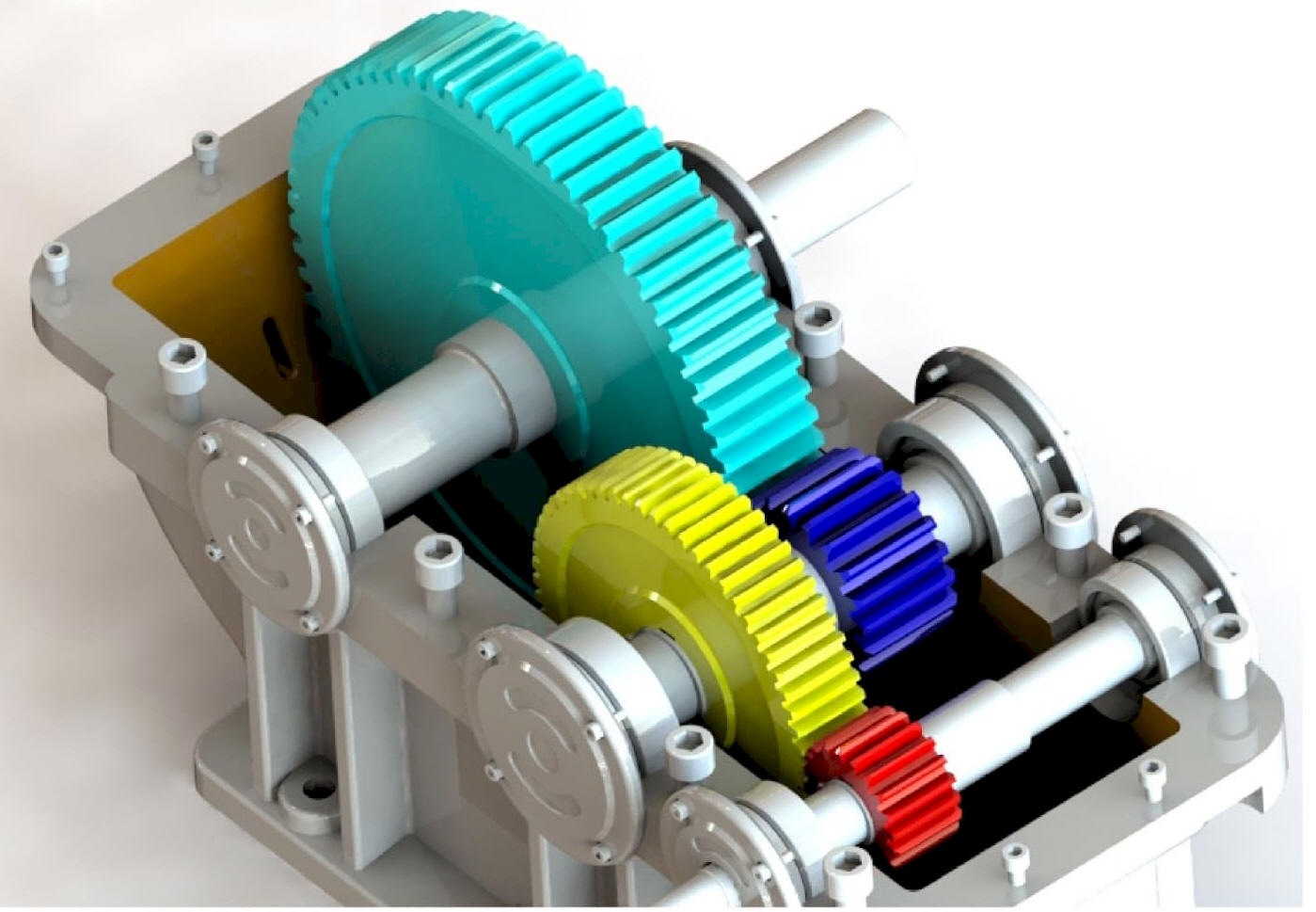
- Two gear sets: A
double reduction gearbox uses two pairs of gears to achieve a
greater speed reduction than a single-stage gearbox.
Intermediate gears:
- A key feature is
having two different-sized gears on the intermediate shaft, which
allows for a second stage of reduction.
|
|
Shafts |
- Input shaft:
Transmits the initial rotation from the power source.
- Output shaft:
Transmits the final, slower rotation and increased torque to the
driven equipment.
Intermediate shaft: A shaft that connects the first reduction gear
set to the second.
|
| Bearings |
- Function: These
support the shafts and allow them to rotate with minimal friction.
- Type: Various types,
such as tapered roller bearings, are used to handle the high loads
and speeds involved in double reduction gearboxes.
|
| How It Works |
| The
principle of a double reduction gearbox is based on a series of gears
with varying sizes. |
-
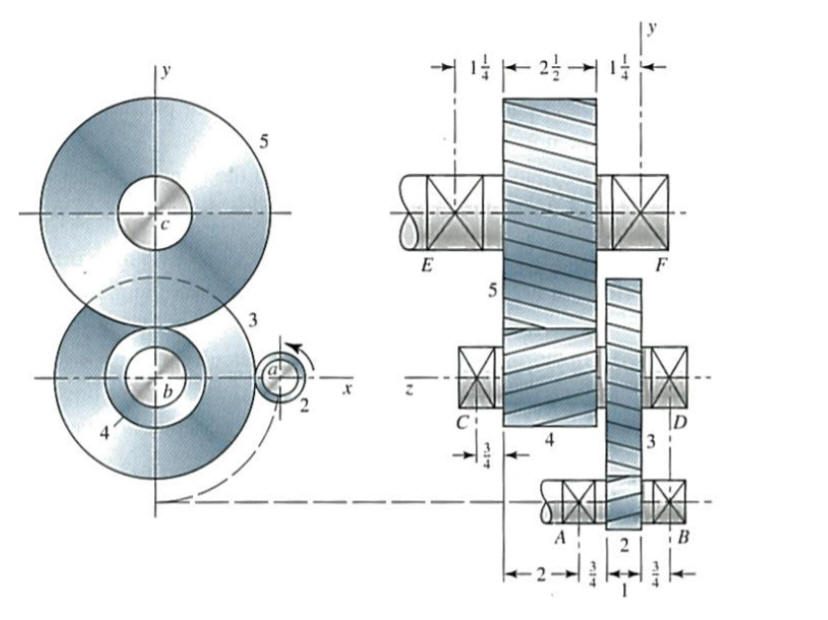
First Stage: A small input gear (pinion), connected to a
high-speed source like a motor, meshes with a larger gear. This
first pair performs an initial speed reduction and torque increase.
-
Second Stage: The larger gear from the first stage is mounted on
an intermediate shaft which also has a second, smaller pinion
attached to it. This second pinion then meshes with an even larger
final output gear.
-
Overall Effect: The speed is further reduced in this second
stage, and the torque is amplified again. The total gear ratio of
the gearbox is the product of the gear ratios of the individual
stages.
This design allows for greater overall force (torque) and very low,
precise output speeds while distributing the load across multiple
gear sets, which enhances durability and efficiency.
|
| Applications: |
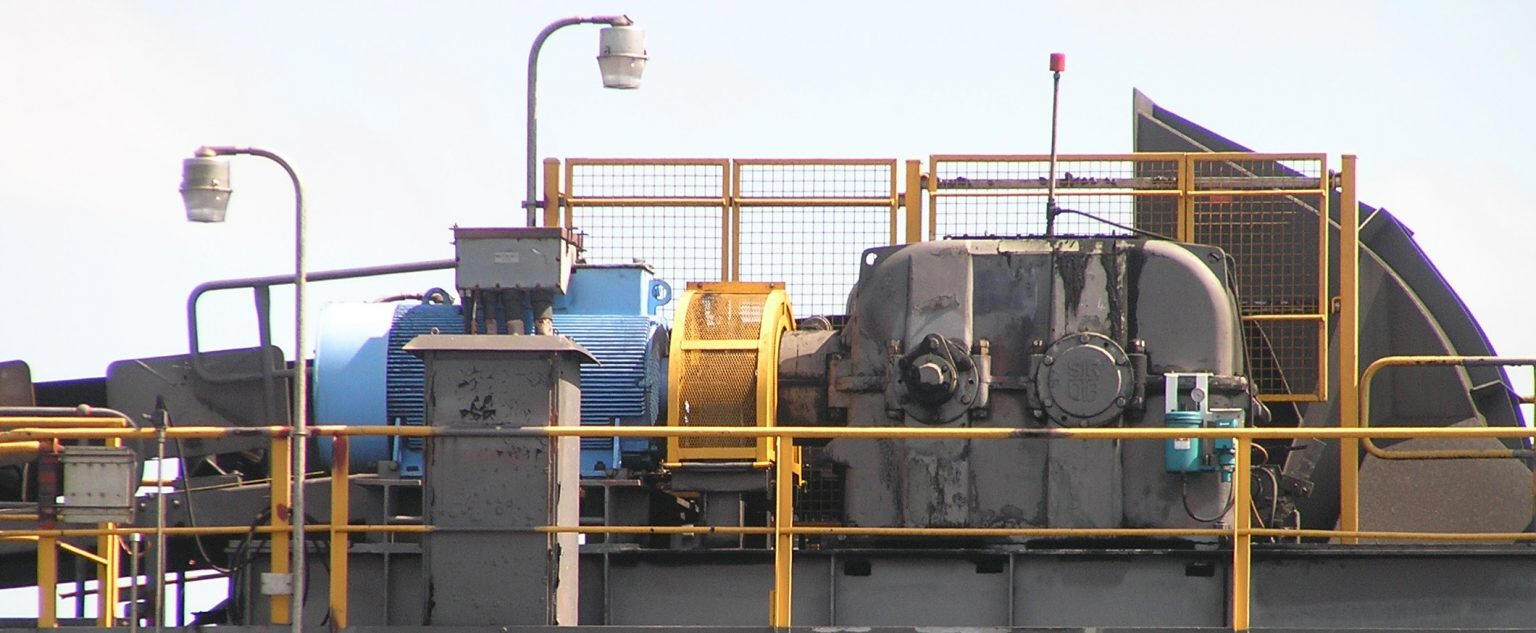
- Material Handling
Systems: Used extensively in conveyor belts, hoists, cranes, and
elevators where heavy loads need controlled, slow, and precise
movement.
- Mining and
Quarrying Equipment: Powering heavy-duty machinery such as
crushers, grinders, and large conveying systems in demanding
environments.
- Construction
Machinery: Providing muscle for equipment like concrete mixers
and other heavy machinery on construction sites.
- Industrial
Processing and Manufacturing: Ensuring smooth and powerful
operation in industrial mixers, agitators, stirring mechanisms, and
other processing equipment within chemical, food, and general
manufacturing plants.
- Power Generation:
Contributing to the smooth and efficient operation of generators and
associated equipment in power plants.
Marine Propulsion: Employed between high-speed steam turbines
and ship propellers to match their different optimal speeds,
providing the necessary torque for movement.
- Wind Turbines:
Used to convert the relatively low velocity of the turbine blades
into the high-speed rotation required by the generator.
- Automotive
Systems: Found within vehicle transmissions to adapt engine
power to the specific speed and torque requirements for different
driving conditions.
- General Heavy
Machinery: Their rugged design and high load-handling capacity
make them ideal for heavy-duty applications across industries like
iron and steel production, paper mills, and rubber and plastic
machinery
|
|
Advantages: |
- High Torque
Output: The primary benefit of a double reduction gearbox is its
ability to provide significantly higher torque output compared to
single-stage gearboxes, making it ideal for demanding, heavy-load
applications.
- Greater Speed
Reduction: The two stages of gear reduction allow for a much
higher total reduction ratio, effectively converting high input
speeds from a motor into very low, controlled output speeds.
- Compact Design:
Despite having two gear stages, these gearboxes are often
designed to be space-efficient, packing a powerful punch within a
relatively small footprint, which is beneficial where installation
space is limited.
- Enhanced
Durability and Reliability: By distributing the load across
multiple gear sets, the stress on individual components is reduced,
leading to less wear and tear, longer service life, and lower
maintenance requirements.
- Precise Control:
The substantial speed reduction allows for precise control over
the output speed and motion, which is crucial for applications
requiring highly accurate positioning.
- Self-Locking
Capability: In double worm gear configurations, the design can
provide a self-locking feature, preventing the load from
back-driving the input, which is an important safety benefit in
lifting and hoisting systems.
- Improved
Efficiency: In some specific double worm gear designs (like the
double enveloping type), the dual-contact mechanism and reduced
friction can lead to improved power efficiency and lower heat
generation compared to standard single worm gears.
|
|
Disadvantages: |
|
Efficiency and wear |
- Lower efficiency:
The sliding contact between gears in some designs, particularly worm
gearboxes, can lead to lower transmission efficiency compared to
other types like planetary or helical gears.
- Increased wear:
The increased friction from sliding contact also leads to more
wear on the gear teeth.
Heat generation: Higher friction can lead to increased heat
generation, potentially requiring cooling measures.
|
|
Maintenance and
complexity |
- Higher
maintenance needs: Due to increased friction and sliding
contact, double reduction gearboxes require more frequent
lubrication and can have a shorter service life.
- Complex
structure: The internal complexity can lead to higher
manufacturing and maintenance costs, and repairs may require
specialized knowledge.
|
|
Performance and cost |
- Lower torque
capacity: Some double reduction gearboxes, such as double
enveloping worm reducers, have a weaker torque transmission capacity
compared to other designs like planetary gearboxes and are not
suitable for heavy-duty applications.
- Higher initial
cost: Precision double reduction gearboxes can have a higher
initial cost compared to other types.
- Potential for
noise and vibration: The operation can produce noise and
vibration, though some high-precision designs can mitigate this.
|
|
|